
CORTEX2 innovators: TIP's 2nd progress update
During Sprint 2 of the CORTEX2 Innovators Support Programme, the TIP project focused on asset creation and preparing a final asset library. The team made significant progress in developing environments for education, entertainment, and culture, all while establishing key partnerships with other CORTEX2 projects.
Read on to learn more about the key milestones The Infinity Palette (TIP) team has achieved and their planned next steps.
TIP's progress during Sprint 2 of the CORTEX2 programme
Q: How would you summarise TIP's latest advancements within the CORTEX2 programme?
A: During Sprint 2, our team focused on the actual creation of assets and preparation of the final asset library. Two primary objectives guided us:
- Asset library preparation and creation: The remaining assets, identified and highlighted during Sprint 1, will be developed and optimised to form the necessary object library.
- Creation of CORTEX2 asset packages: These assets will be assembled into packages that are compatible with the CORTEX2-platform, making them accessible to all CORTEX2 users.
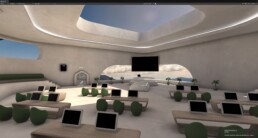
The environments created include spaces for education, entertainment, and culture, such as virtual classrooms, a concert stage, and two lobbies. One lobby serves as a neutral space to connect various environments, while the other was tailored for exhibitions or concerts, developed in close collaboration with the HYMNE CORTEX2 project, focusing on entertainment and concerts. This collaboration led to the delivery of the first Unity package to the HYMNE team.
This phase culminates in reaching key performance indicators (KPIs) related to asset delivery. Additionally, we’ve started to create alliances with other CORTEX2 users like Actimage and SENSO3D, which have already influenced our project. Collaborating with other CORTEX2 projects ensures the broader CORTEX2 Platform will use our environments and assets.
Rather than creating an exhibition environment, we’ve adapted to the needs of HYMNE by focusing on creating a lobby environment that leads to the experiences/concerts created by them.
Our deliverable is key to establishing interconnections and relationships between us and relevant CORTEX2 user projects. We will continue to ensure alignment with other initiatives, along with other valuable connections that support the focus of our work.
Q: What key milestones has TIP achieved, and what impact have they had?
A: We have started with creating the assets and assembling the first Unity packages, following our project plan and tasks defined during the previous sprint. These are the key achievements that we have reached:
- Design blockout of the scenes
- Asset creation of static environments (replacing blockout)
- Creation of dynamic objects
- Development of unique functionalities for different scenes
- Export of the entire scene as a Unity package for other CORTEX2 User projects, such as HYMNE
Q: What are TIP's next steps?
A: Looking ahead, we will continue to:
- Strengthen collaborations with Actimage and SENSO3D.
- Complete the remaining environments and assets, preparing them for user testing.
- Refine our project based on feedback from CORTEX2 Users.
- Ensure the successful completion of the TIP project.
Check out TIP's previous interview and stay updated on its progress!
Want to know more about other CORTEX2 innovators' updates? Browse all our supported teams on the CORTEX2 website:
Open Call 1 winners - Open Call 2 winners

CORTEX2 innovators: MHI's 2nd progress update
During the second Sprint of the CORTEX2 Innovators Support Programme, the MHI team has made great progress. They successfully integrated the SG interaction system with OpenXR hand tracking, enabling social interactions such as handshakes and high fives. In addition, they created an MVP scene, demonstrating the system's potential for multiplayer haptic interactions.
Read on to discover more about the Multiplayer Haptic Interactions (MHI) team's key milestones and achievements.
MHI's progress during Sprint 2 of the CORTEX2 programme
Q: How would you summarise MHI's latest advancements within the CORTEX2 programme?
A: We have made the full integration of the SG interaction system and OpenXR hand tracking, enabled users to engage in social interactions, such as handshakes and high-fives, within a virtual environment, and created an MVP scene.
Q: What key milestones has MHI achieved, and what impact have they had?
A: We now have for the first time an MVP of a scene where people with haptic gloves can interact with other people using hand tracking.
Q: What are MHI's next steps?
A: Our next step is polishing the MVP to a shareable scene and testing it with the CORTEX2 partners.
Check out MHI's previous interview and stay updated on its progress!
Want to know more about other CORTEX2 innovators' updates? Browse all our supported teams on the CORTEX2 website:
Open Call 1 winners - Open Call 2 winners
CORTEX2 innovators: MGL's 2nd progress update
During the second Sprint of the CORTEX2 Innovators Support Programme, the MGL team successfully finalised a gesture recognition model. This model has been integrated into a Unity package, ensuring seamless compatibility with the CORTEX2 framework. These advancements lay a solid foundation for future applications in virtual reality and immersive technologies.
Read on to discover the key milestones that the Magos Gestures Library (MGL) team has achieved and the impact they will have on the development of gesture recognition technology.
MGL's progress during Sprint 2 of the CORTEX2 programme
Q: How would you summarise MGL's latest advancements within the CORTEX2 programme?
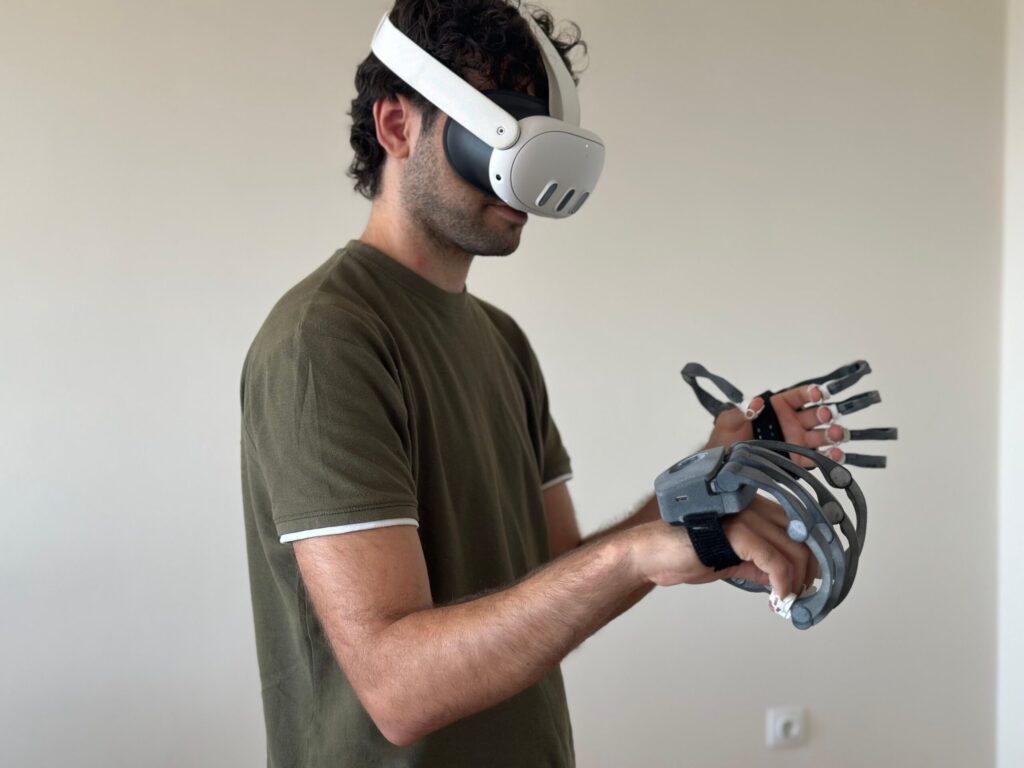
A: During Sprint 2, we achieved significant advancements in the Magos Gestures Library, successfully finalising the gesture recognition model, which now accurately captures and classifies 15 distinct hand gestures. We developed this model into a Unity package, ensuring seamless integration with the CORTEX2 framework.
 Q: What key milestones has MGL achieved, and what impact have they had?
A: Our key milestones have been:
- Completion of gesture recognition model: We captured and integrated all 15 predefined hand gestures into our system. This milestone is crucial as it provides a robust foundation for our gesture recognition capability, making it ideal for various applications in virtual reality environments.
- Development and integration of Unity package: The gesture recognition module was packaged and tested within the Unity environment, ensuring full compatibility with the CORTEX2 framework. This ensures that developers can easily incorporate our technology into their projects, promoting widespread adoption and fostering innovation across the developer community.
- Accuracy verification process: We established a method to test and confirm the accuracy of our gesture recognition system, using real-world measurements to validate the model's performance.
These achievements collectively enhance the practical utility and reliability of the MGL project, positioning it as a cutting-edge tool for developers and researchers in immersive technologies. They significantly contribute to reducing the complexity and technical barriers previously associated with integrating advanced gesture recognition into diverse applications, thus accelerating innovation and development within the CORTEX2 ecosystem.
Q: What are MGL's next steps?
A: Our next steps will be:
- Demonstration of gestures in a CORTEX2 scenario: In the next Sprint, we plan to demonstrate the integrated gesture recognition system within an actual CORTEX2 scenario. This will showcase its practical applications and effectiveness in real-world settings.
- Release of user manual: We will finalise and distribute a comprehensive user manual that makes it easy to create and use gestures. This manual will facilitate broader adoption and help users leverage our technology to its full potential.
- Ongoing development and refinement: We will continue to refine and enhance the system based on user feedback and integration experiences. This iterative development will ensure that the technology remains at the forefront of gesture recognition research and application.
Check out MGL's previous interview and stay updated on its progress!
Want to know more about other CORTEX2 innovators' updates? Browse all our supported teams on the CORTEX2 website:
Open Call 1 winners - Open Call 2 winners
CORTEX2 innovators: FLYTEX's 2nd progress update
During the second Sprint of the CORTEX2 Innovators Support Programme, the FLYTEX team made significant advancements by successfully integrating IoT sensors and actuators into the CORTEX2 environment. They also enhanced a user-friendly interface for configuring and selecting data series, developed a widget, and performed comprehensive end-to-end integration tests. These advancements lay the groundwork for a more interactive and functional experience within CORTEX2.
Read on to learn more about their key milestones achieved during this stage and their impact.
FLYTEX's progress during Sprint 2 of the CORTEX2 programme
Q: How would you summarise FLYTEX's latest advancements within the CORTEX2 programme?
A: At FLYTEX, we have successfully integrated IoT sensors and actuators into the CORTEX2 environment, enhanced a user-friendly interface for configuring and selecting data series, developed a widget and performed end-to-end integration tests.
Q: What key milestones has FLYTEX achieved, and what impact do they have?
A: We have successfully achieved the complete integration of IoT data into the 3D environment.
Q: What are FLYTEX's next steps?
A: Moving forward, we plan to improve the visuals, integrate data into CORTEX2 bubbles, and create more functional widgets, which will include dashboards and graphics.
Check out FLYTEX's previous interview and stay updated on its progress!
Want to know more about other CORTEX2 innovators' updates? Browse all our supported teams on the CORTEX2 website:
Open Call 1 winners - Open Call 2 winners
CORTEX2 innovators: EXTERNALISE's 2nd progress update
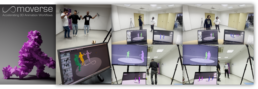
During the second Sprint of the CORTEX2 Innovators Support Programme, the EXTERNALISE team made significant progress in improving their Moverse Capture technology. The technology was extended to capture multiple actors in real-time, and it was integrated with Unity3D, enabling the live streaming of user avatars and body language into the game engine. This advancement is a key step forward in creating immersive, real-time communication experiences.
Read on to learn more about the key milestones that EXTERNALISE has reached.
EXTERNALISE's progress during Sprint 2 of the CORTEX2 programme
Q: How would you summarise EXTERNALISE's latest advancements within the CORTEX2 programme?
A: In this sprint, EXTERNALISE has improved the Moverse Capture markerless technology, extending it to capture multiple actors in real-time. This technology has also been integrated with Unity3D, streaming the users' avatars and body language live into the game engine.
Q: What key milestones has EXTERNALISE achieved, and what impact do they have?
A: At the end of this sprint, we were able to record a demo with two remote user groups emplaced in a shared virtual space and in real-time. Each user group was located in a distinct physical space, with the virtual environment hosted remotely. This type of technology can drive future communication representations that extend beyond traditional video and audio, driving expressive avatars and conveying non-verbal communication cues efficiently and effectively.
Q: What are EXTERNALISE's next steps?
A: Our goal moving forward is to release the capture technology developments in the Moverse Capture product and demonstrate the technology in a high-profile venue.
Check out EXTERNALISE's previous interview and stay updated on its progress!
Want to know more about other CORTEX2 innovators' updates? Browse all our supported teams on the CORTEX2 website:
Open Call 1 winners - Open Call 2 winners
CORTEX2 innovators: CDLPG's 2nd progress update
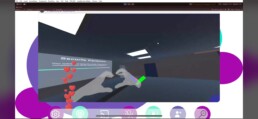
During Sprint 2 of the CORTEX2 Innovators Support Programme, CDLPG made significant strides in integrating gesture recognition and dynamic action mapping systems within the CORTEX2 framework. By focusing on three key areas — input and gesture recognition, gesture registration, and dynamic action mapping — the team has laid a solid foundation for future advancements.
Discover CDLPG (Co-development of a Dynamic Library of Personalised Gestures)'s latest milestones and the impact they have below.
CDLPG's progress during Sprint 2 of the CORTEX2 programme
Q: How would you summarise CDLPG's latest advancements within the CORTEX2 programme?
A: We mainly focused on three key areas:
- The implementation of input and gesture recognition components,
- the development of a gesture registration system,
- and the implementation of a dynamic action mapping component.
These components were integrated within the CORTEX2 framework, laying a foundation for future fine-tuning and improvement.
Q: What milestones did CDLPG achieve, and what impact do they have?
A: Key achievements include:
- The integration of input and gesture recognition components,
- the development of a gesture registration system capable of managing and recognising at least 10 gestures within the CORTEX2 pilot,
- and the creation of a dynamic mapping system for linking gestures to specific actions.
https://www.youtube.com/watch?v=FVTM6wYUoPU
Q: What are CDLPG's next steps?
A: During the next Sprint, the gesture recognition system will be tested for stability, consistency, usability, and improved accordingly.
Check out CDLPG's previous interview and stay updated on its progress!
Want to know more about other CORTEX2 innovators' updates? Browse all our supported teams on the CORTEX2 website:
Open Call 1 winners - Open Call 2 winners
CORTEX2 innovators: ARY's 2nd progress update
As part of the second Sprint of the CORTEX2 Innovators Support Programme, ARY focused on refining its hardware and software solutions for spatial anchoring in extended reality (XR) environments. The project is developing compact, interoperable beacon systems and Unity-compatible packages that enable seamless scene anchoring and communication via Ultra-Wideband (UWB) and Bluetooth.
Read on to learn about their latest breakthroughs — and what’s next!
ARY's progress during Sprint 2 of the CORTEX2 programme
Q: How would you summarise ARY's latest advancements within the CORTEX2 programme?
A: ARY had the opportunity to develop a complete and modular Unity package set for CORTEX2. These packages together enable Ultra-Wideband and Bluetooth communication with the previously developed beacons, along with scene anchoring between devices.
Q: What milestones did ARY reach, and what impact do they have?
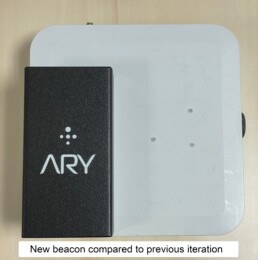
A: In Sprint 2, ARY considerably reduced the size of its beacons by designing a custom PCB instead of relying on off-the-shelf components. This led to an 80% reduction in volume, which significantly improves ease of installation for CORTEX2 operators and lowers production costs.
ARY now offers a complete software solution that is compatible with Unity, which allows easy integration with the beacons. With just a few lines of code, a developer can leverage ARY's solution for scene anchoring. More advanced users are able to communicate with the beacons with a lower layer solution to access precise ranging data from the beacons.
Q: What are ARY's next steps?
A: In Sprint 3, ARY will develop an Ultra-Wideband Tag: a small device that makes any device compatible with the system through a Bluetooth interface. It is especially important for devices that are not equipped with Ultra-Wideband chips. Finally, ARY will test the solution in various configurations to demonstrate the reliability of the system in different scenarios and determine its optimal conditions.

Check out ARY's previous interview and stay updated on its progress!
Want to know more about other CORTEX2 innovators' updates? Browse all our supported teams on the CORTEX2 website:
Open Call 1 winners - Open Call 2 winners
CORTEX2 innovators: XRisis's 1st progress update
Emergency response teams must stay calm and follow strict protocols, even under the most stressful situations. But how can they prepare for the pressure of real-life disasters without putting themselves or others at risk? Here is where XRisis comes in. As one of the winners of our first Open Call, this project uses extended reality (XR) to create immersive, repeatable, and collaborative training simulations for first responders. By combining XR with real-time communication tools, XRisis equips humanitarian teams with the confidence and skills they need before facing a real emergency.
Continue reading to discover how XRisis is improving training for crisis management with XR technologies.
Q: How would you describe XRisis in one sentence?
A: Situational awareness training for emergency first responders, exploiting immersive technologies.
Q: What problem are you solving? What makes your solution unique?
A: When faced with emergency and crisis situations, the ability to follow protocols calmly, while under extreme stress, is paramount, and crisis response teams undergo intensive training and continuous upskilling to help cope and respond in a calm and professional manner. Additionally, it is difficult to replicate an emergency or humanitarian crisis in the real world, as this requires significant time and resources. Conventional methods for training and upskilling can be costly, inefficient and logistically challenging.
XRisis addresses these challenges by leveraging the real-time collaborative communication functionality provided by the CORTEX2 platform to create inclusive, engaging, and easily repeatable simulated virtual crisis environments, without the associated dangers of the real world.
Q: What are XRisis’s main objectives?
A:
- Design a virtual simulation environment for emergency and crisis management training and upskilling that exploits the real-time collaborative functionalities provided by the CORTEX2 communications platform and third-party enabler services, through a mix of augmented reality (AR), virtual reality (VR) and/or mixed reality (MR).
- Specify, implement and deploy an MVP of this design, using three exemplar pilots that showcase the potential added value of real-time collaborative immersive technologies as an innovator in realising emergency and crisis management response simulation, planning, training, and upskilling.
- Using ACF’s existing Quality Standards - CHS (Core Humanitarian Standards) and MEAL framework 1 (Monitoring, Evaluation, Accountability, and Learning) - a comprehensive validation of the MVP’s efficacy will be performed, as benchmarked against measurable KPIs.
- Promote the results of the MVP validation with other emergency and crisis response agencies as an advancement of the current State of the Art (SotA), by adopting it as a future standard simulation, planning, training, and upskilling procedure.
CORTEX2 support programme progress
Q: What have you achieved so far?
A:
- Requirements generated for the three user Pilots.
- Integration nearly complete with the key CORTEX2 enabler technologies.
- Pilot front-end nearly complete.
- Preparation started for deployment of three Pilots to user validation.
Q: How is participating in CORTEX2 supporting XRisis?
A: Being able to explore the value of CORTEX2 immersive enabling technologies against the three Pilots with our lead user, ACF.
Q: What are your next steps within the programme?
A: We are preparing the deployment of our three pilots, against which we will evaluate the value added of the CORTEX2 enabling technologies.
Learn more about XRisis and stay updated on its progress!
Want to explore more XR innovation? Browse all our supported projects on the CORTEX2 website:
Open Call 1 winners - Open Call 2 winners
CORTEX2 innovators: XRehab's 1st progress update
XRehab is one of the 10 projects selected in the first CORTEX2 Open Call. The project team is developing a VR platform to support both hospital-based and at-home rehabilitation by adapting to patients’ motor and psycho-cognitive skills.
Keep reading to learn more about the team’s work and what they’ve achieved so far.
Q: How would you describe XRehab in one sentence?
A: The XRehab project seeks to develop an adaptable VR simulation platform for hospital and home rehabilitation, enhancing personalisation, accessibility, and collaboration to improve treatment outcomes and quality of life for patients with neuromuscular and neurodegenerative diseases.
Q: What problem are you solving? What makes your solution unique?
A: The XRehab project offers a groundbreaking virtual reality (VR) platform that is versatile, adaptable, and accessible across all existing VR systems, providing both immersive and semi-immersive experiences tailored to individual psycho-cognitive and motor skills.
Unlike traditional rehabilitation systems, XRehab simplifies the creation of personalised VR environments, even for non-expert developers, and is designed with future home-based use in mind. By fostering collaboration between healthcare professionals and technical experts, it enables personalised treatment, remote accessibility, and enhanced patient engagement, ultimately addressing the social and economic burdens associated with these diseases.
Q: What are XRehab’s main objectives?
A:
- Develop VR simulation scenarios for neuromuscular patients
- Design a system that adapts to the psycho-cognitive and motor skills of patients
- Increase accessibility and remote usability
- Facilitate collaboration between health and technical experts
- Improve patient engagement and experience
- Reduce social and economic burdens
CORTEX2 support programme progress
Q: What have you achieved so far?
A: The initial phase of the XRehab project has laid a robust foundation for the development of an innovative VR-based rehabilitation platform for patients with neuromuscular and neurodegenerative diseases.
Through a comprehensive approach that combined literature review, clinical insights, and technical analysis, we have successfully achieved several critical milestones:
- User requirements: We have identified key user interface requirements and preferred VR scenarios based on patient feedback and clinical expertise in order to meet the specific needs and preferences of our target patient population.
- Evaluation metrics: We have established a comprehensive set of evaluation tools, including questionnaires to assess technology acceptance, simulator sickness, user engagement, anxiety levels, and emotional responses. Such questionnaires will provide valuable data for both clinicians and patients to assess the impacts of our VR interventions.
- Technical specifications: We have successfully outlined the technical requirements for integrating WEBXR assets from the CORTEX2 platform into Unity, paving the way for the development of effective VR-based experiences.
- CORTEX2 integration plan: A clear, step-by-step integration plan has been developed and validated, ensuring smooth incorporation of the CORTEX2 framework into our development process.
Q: How is participating in CORTEX2 supporting XRehab?
A: The programme has provided us with access to a network of experts in VR technology, healthcare, and interdisciplinary collaboration. Further, CORTEX2 has fostered connections with like-minded innovators and professionals, facilitating knowledge exchange and potential partnerships that align with our project’s objectives. Lastly, the programme has offered us a space to present our ideas, receive valuable feedback, and validate our project's direction.
Q: What are your next steps within the programme?
A:
- Developing and refining VR scenarios based on the identified themes: nature-based environments, activity-oriented simulations, and gamified exercises
- Implementing the technical integration plan to create functional prototypes within the CORTEX2 framework
- Patient recruitment and conducting initial user testing with patients to gather feedback and refine our approach
- Exploring strategies for long-term evaluation to complement our short-term assessment tools
Learn more about XRehab and stay updated on its progress!
Want to explore more XR innovation? Browse all our supported projects on the CORTEX2 website:
Open Call 1 winners - Open Call 2 winners
CORTEX2 innovators: vScientist's 1st progress update
Understanding engineering concepts often requires navigating abstract theories and complex simulations. The vScientist project, one of the 1st CORTEX2 Open Calls, is working to change that by using immersive visualisation tools to make Computational Fluid Dynamics (CFD) more accessible, inclusive, and engaging for students from all backgrounds.
Keep reading to discover how vScientist is helping bring theory to life through virtual learning.
Q: How would you describe vScientist in one sentence?
A: Enhancing education with the aid of virtual testing in engineering problems using Computational Fluid Dynamics simulations.
Q: What problem are you solving? What makes your solution unique?
A: Most engineering concepts can be complex and abstract, making them difficult to understand. In many engineering academic settings, educators and students face the challenge of generating physics-based simulations that can take days or weeks to complete. These simulations are usually visualised and analysed on a 2D display and often at a single point in time, which reduces the dynamic and inherently 3D data to static images.
VR technology can be a paradigm shift in education by offering high-quality, inclusive, and sustainable tools using real-life examples. vScientist is developing a novel and comprehensive VR platform to enhance the learning and accessibility of Computational Fluid Dynamics for students and individuals from diverse backgrounds, promoting social inclusion and accessibility in STEM fields.
Q: What are vScientist’s main objectives?
A: vScientist aims to develop a straightforward, semi-automated workflow for enhanced viewing of CFD results and associated data in an immersive virtual environment. This workflow will support commonly used CFD software and will be tested by a range of users to demonstrate its ease of use.
Three baseline scenarios, each with various sub-scenarios, will be generated to explore the solution’s potential.
CORTEX2 support programme progress
Q: What have you achieved so far?
A: A VR workflow has been established to enhance the learning and accessibility of Computational Fluid Dynamics for students and individuals from diverse backgrounds. This will be further developed in the second phase of the project.
The technical requirements for deploying the use case have been identified, and a first version has been successfully implemented in Unity, achieving the first key performance indicator.
Preliminary testing suggests that the platform supports student learning by allowing them to explore real-life problems in fluid mechanics theory through virtual interaction. This represents a step forward in supporting STEM education with immersive technologies.
Q: How is participating in CORTEX2 supporting vScientist?
A: Participating in CORTEX2 has given us the unique opportunity to be part of an amazing team of experts. We have the chance to work with groundbreaking technology, receive valuable support and feedback from our mentors, and collaborate with different teams and projects across the CORTEX2 consortium.
Q: What are your next steps within the programme?
A: In the next phase, we will begin applying the VR framework in educational activities. We plan to test more complex fluid dynamics cases within the developed workflow and involve a broader group of students to evaluate user experience through the CORTEX2 framework.
This will be a great opportunity to demonstrate the impact of CORTEX2 on engineering education by increasing immersion and improving learning outcomes for students.
Learn more about vScientist and stay updated on its progress!
Want to explore more XR innovation? Browse all our supported projects on the CORTEX2 website:
Open Call 1 winners - Open Call 2 winners
CORTEX2 innovators: SELFEX2's 1st progress update
The SELFEX2 team is working to bring real-time, interactive training to the manufacturing sector using extended reality (XR) technologies. Through their participation in the CORTEX2 support programme, they are developing a solution that enables one senior operator to train multiple junior operators remotely, bridging geographical gaps and preserving vital know-how.
Keep reading to learn how SELFEX2 is addressing training challenges in manufacturing and the impact it could have on efficiency, sustainability, and workforce development.
Q: What is SELFEX2 in one sentence?
A: Our aim is to integrate the SELFEX concept into the CORTEX2 framework. This allows for real-time training between one teacher-senior operator in one location and several junior operators in remote locations.
Q: What problem are you solving? What makes your solution unique?
A: SELFEX2 will improve the manufacturing learning process, reducing trainer time, providing an objective of the readiness of the operator, decreasing errors in line and usage of machinery due to short trainings, saving senior know-how and allowing remote trainings which are currently impossible. The impact is extremely relevant from a European landscape, and taking into account the CORTEX2 specific objectives.
Q: What are SELFEX2’s main objectives?
A:
- Allowing a real-time interaction between trainer and students when learning manufacturing tasks using finger-tracking information. This would be achieved by integrating the SELFEX concept into the CORTEX2 framework.
- Demonstrate and evaluate the SELFEX2 approach with real users who eventually may adopt it. This would be achieved by interacting with manufacturers and customers of the SFC products.
- Provide a supplementary use case to CORTEX2 to validate its framework.
CORTEX2 support programme progress
Q: What have you achieved so far?
A: The main conclusion is that the real-time behaviour will be provided using the Rainbow calls. This means that the SELFEX platform will have the capability to launch a Rainbow call between SELFEX users, in which video, audio, and kinematic (finger and wrist positions) information would be shared. Since audio and video sharing are already available in the Rainbow platform, the challenge is how to share kinematic information during the call.
The requirements from the client's and SELFEX2's point of view have been compiled, and the use cases that will be used as a tool to validate the system have been described.
Q: How is participating in CORTEX2 supporting SELFEX2?
A: CTAG, as the technology provider, will benefit from the evolution of the current SELFEX solution by integrating new features and modules from the CORTEX2 framework. SFC, as the technology adopter, will benefit from the reduction in costs of travelling, higher productivity due to less time spent in displacements, and higher employee satisfaction due to an increase in work-life balance. CORTEX2 will benefit from a supplementary use case to validate its framework.
The stakeholders will benefit from know-how retention, increased worker efficiency and fewer errors due to short experience, development of new skills, and reduced energy and resources needed while training and configuring machinery. In the long term, the solution could enable tasks that can be done remotely, implying fewer people on site in each work shift and thus less transportation costs and emissions.
The reduction in the number of travels per employee will have a significant economic impact on the companies. It includes the travelling costs themselves (flights, hotels, diets), and employees’ overtime payments. Moreover, it will impact the reduction in CO₂ emissions. It is estimated that the aviation CO₂ emission is around 100 kg CO₂ per passenger per hour.
Another important economic impact will be the retention of know-how and reduced downtime sometimes required until the training of new employees is completed. All these aspects reflect in an enhanced operational efficiency for both the technology adopter and stakeholders.
Q: What are your next steps within the programme?
A: For the next phase, CTAG will lead the development of the new functionalities into the SELFEX concept, and SFC will support from a user perspective.
Also scheduled is the integration in the CORTEX2 framework and deployment of an MVP:
- Usage of the CORTEX2 tools and components during the development.
- Integrating the developments into CORTEX2.
- Deploying an MVP as a result.
Learn more about SELFEX2 and stay updated on its progress!
Want to explore more XR innovation? Browse all our supported projects on the CORTEX2 website:
Open Call 1 winners - Open Call 2 winners
CORTEX2 innovators: SCIPLANT's 1st progress update
Urban planning decisions shape the way we live, but traditional approaches often leave citizens out of the conversation. SCIPLANT is using extended reality (XR) to change that, blending immersive visualisations with real-time data and collaborative tools that put people at the centre of city design. As part of CORTEX2, the project is building an innovative platform that empowers both professionals and the public to co-create smarter, more sustainable urban spaces.
Keep reading to discover how SCIPLANT is creating impact, and what comes next.
Q: What is SCIPLANT in one sentence?
A: SCIPLANT is an XR-powered platform revolutionising urban planning with integrated data, immersive 3D visualisations, and citizen engagement tools to create sustainable and inclusive cities.
Q: What problem are you solving? What makes your solution unique?
A: Urban planning often lacks meaningful citizen input, which leads to plans disconnected from the real needs of communities. Traditional tools are static, siloed, and inefficient when it comes to real-time collaboration.
SCIPLANT combines immersive XR technology with gamified, collaborative tools to support active citizen involvement. It empowers urban planners with real-time data, 3D environments, and multi-user features. This unique blend of technical precision and public engagement fosters fun, inclusive, and informed city design.

Q: What are SCIPLANT’s main objectives?
A:
- Engage citizens in urban planning through XR tools like virtual town halls and 3D tours.
- Promote sustainable urban growth by integrating data for eco-friendly solutions, including traffic, building permit information, zoning data, bicycle paths, public transportation routes, waste collection points, green spaces, air quality indices, energy consumption, and water and wastewater statistics.
- Bridge the technical and public domains with intuitive collaboration tools for professionals and citizens alike.
CORTEX2 support programme progress
Q: What have you achieved so far?
A: We have developed three core scenarios: Site Analysis, Virtual Tours, and Virtual Town Halls. We’ve also integrated real-time and historical data for dynamic visualisations. By leveraging CORTEX2 and Rainbow components — specifically the Rainbow Unity SDK and COVA — we’ve been able to build a robust technical foundation for our platform.
https://www.youtube.com/watch?v=gu-3lFgjMF0
Q: How is participating in CORTEX2 supporting SCIPLANT?
A: CORTEX2 has helped us establish a strong foundation for spatial, land-based planning that’s adaptable for various future use cases. Through Rainbow’s advanced communication tools, we’ve integrated seamless multiplayer conferencing for collaborative urban planning.
The platform also allows us to deliver high-resolution XR visualisations, offering immersive 3D city visuals with unmatched clarity, enabling precise and collaborative planning experiences for multiple stakeholders.
In addition, access to technical components like 3D reconstruction and virtual assistants has accelerated our development. We’ve been able to prototype and refine key functionalities much faster.
Q: What are your next steps within the programme?
A: We plan to deepen our integrations, particularly around real-time 3D reconstruction, virtual assistants, and gesture libraries. We’ll also finalise and test our core use-case scenarios through pilot studies involving both urban planners and citizens.
Learn more about SCIPLANT and stay updated on its progress!
Want to explore more XR innovation? Browse all our supported projects on the CORTEX2 website: