

CORTEX2 innovators: CARE XR's 2nd progress update
In the final stretch of the CORTEX2 Innovators Support Programme, CARE XR has made significant advancements toward transforming how emergency teams communicate, coordinate, and respond. Built to enhance multilingual collaboration and situational awareness in crisis scenarios, the CARE XR platform has evolved from concept to a tested, deployable solution. During this last phase, the team focused on system validation in realistic simulations with first responders and prepared for international demonstrations and real-world uptake.
Below, they share what they’ve achieved, the lessons learned, and what’s next for CARE XR.
CARE XR's progress on the CORTEX2 Programme
Q: How would you summarise the advances CARE XR has made during Phase 2 of the CORTEX2 Support Programme?
A: During the second phase of the CARE XR project, we successfully developed and deployed a fully functional prototype that demonstrated the core capabilities of our platform. This phase highlighted four key components that define the value and innovation of CARE XR:
- We enabled enhanced communication through seamless integration with the Rainbow platform, allowing real-time audio transcription, translation, and summarisation across multiple languages to support multilingual coordination in emergency scenarios.
- We implemented 3D reconstruction techniques to visualise damaged buildings and vehicles, giving first responders a clearer understanding of affected environments and enabling more effective situational planning.
- We integrated live data from IoT devices — such as temperature and humidity sensors — into the extended reality (XR) environment, providing real-time updates and visual alerts when critical thresholds were exceeded.
- Most importantly, we achieved full integration with the National Incident Command System (NICS), allowing our XR interface to communicate directly with a widely used operational coordination tool. This integration ensures that CARE XR not only enhances situational awareness but also aligns seamlessly with existing emergency management workflows and infrastructure.

Q: What has CARE XR achieved now that the Programme is complete?
A: In the third phase of the CARE XR project, we focused on testing and evaluating the system within simulated emergency scenarios to assess its real-world applicability. This phase included a comprehensive usability study involving first responders from various regions and backgrounds, who interacted with the platform in their native languages. Alongside qualitative feedback, we also conducted a quantitative evaluation of the system’s performance, focusing on metrics such as accuracy, responsiveness, and user confidence in critical situations.
The results were highly encouraging. The system was well received by first responders, who found the XR interface intuitive, the communication features effective, and the integration with real-time data sources valuable for decision-making in high-stress environments. As a direct result of this positive feedback, we have established a partnership with the Crisis Management Center of North Macedonia, where a version of the CARE XR system will soon be deployed for operational use.
In parallel, we are incorporating suggestions and recommendations from the testing phase further to tailor the platform to the needs of emergency personnel. These refinements will ensure that the final system is not only technically robust but also aligned with the practical workflows and requirements of national crisis management agencies. This marks a significant milestone in transitioning CARE XR from a research prototype into a deployable, real-world solution with meaningful impact.
Q: What would you highlight about the Support Programme, what's helped advance your solution the most?
A: One of the most important aspects to highlight is the outstanding communication and continuous support we received from the CORTEX2 team and our assigned mentor. Their guidance was instrumental throughout the project. Additionally, the tools made available to us, such as the Rainbow platform for communication, 3D reconstruction services, transcription and summarisation tools, and IoT integration through Intracom services, proved to be highly mature, reliable, and efficient. The teams behind these services were exceptionally responsive, providing not only comprehensive documentation but also hands-on technical support whenever we encountered challenges. Their collaborative approach greatly contributed to the successful implementation of our solution.
Q: What's the status of CARE XR after completing the Programme? What are your next steps?
A: Our current focus is the upcoming presentation and live demonstration of the CARE XR system at the NATO Emergency Management Exercise "BULGARIA 2025", scheduled for September 2025. During this exercise, we will showcase the capabilities of CARE XR to participating emergency management agencies, highlighting its potential to enhance coordination and situational awareness.
Before this event, we will also present our solution at CORTEX2's final event on EuroXR 2025, which will take place in Winterthur, Switzerland, from 3 to 5 September 2025. This will be an important opportunity to demonstrate CARE XR to a broader international audience and gather valuable feedback from the XR research and development community. In parallel, we are in active discussions with several countries that have already implemented the NICS platform, including Bosnia, Montenegro, Kosovo, and Albania, regarding the potential integration of CARE XR into their existing emergency response infrastructures.
Check out CARE XR's previous interview and stay updated on its progress!
Want to know more about other CORTEX2 innovators' updates? Browse all our supported teams on the CORTEX2 website:
Open Call 1 winners - Open Call 2 winners

CORTEX2 innovators: AgriVision's 2nd progress update
As part of the final phase of the CORTEX2 support programme, the AgriVision team has continued to improve their digital tool, integrating extended reality (XR) for efficient and sustainable farming.
Keep reading to learn about AgriVision's latest developments and what’s next for the project.
AgriVision's progress on the CORTEX2 Programme
Q: How would you summarise the advances AgriVision has made during Phase 2 of the CORTEX2 Support Programme?
A: The AgriVision team successfully developed and distributed a Minimum Viable Product (MVP), including a light (mobile) version and a professional (with incorporation of the AR/XR components) version, meeting the requirements of the CORTEX2 Programme and incorporating insights from our mentoring sessions.
Q: What has AgriVision achieved now that the Programme is complete?
A: Upon completion of the CORTEX2 Support Programme, AgriVision successfully deployed an MVP, integrating XR, farm management information systems (FMIS), and CORTEX2 components. Using those in both light and professional versions, the solution enhanced precision agriculture for crops like wheat and cotton. Furthermore, it achieved robust technical reliability and sociological impact by empowering farmers with intuitive tools.
Economic impact can be achieved through optimised resource use, while benefits could also result from sustainable practices. User satisfaction confirmed high usability and acceptance, with the Light version excelling in accessibility and the Pro version offering innovative XR visualisations.
Q: What would you highlight about the Support Programme, what's helped advance your solution the most?
A: The CORTEX2 Support Programme significantly advanced AgriVision through tailored mentoring and provision of technical components, enabling the development of the MVP. Insights from mentoring sessions enhanced the integration of XR, FMIS, and CORTEX2 components, notably the Rainbow platform and virtual assistant, improving farmer-consultant collaboration. Real-world pilot testing with over 20 users provided critical feedback and a satisfaction study, validating usability and highlighting areas for improvement.
Q: What's the status of AgriVision after completing the Programme? What are your next steps?
A: AgriVision has completed its pilot phases under the CORTEX2 Support Programme, with the Light (mobile) and Pro (XR) versions developed and evaluated. Feedback from the limited rollout highlighted strengths and areas for improvement. The solution is now a step closer to commercial rollout.
Next steps include creating onboarding materials to simplify adoption, especially for the Pro version’s XR interface; refining Growing Degree Days algorithms; and planning iterative updates for enhanced functionality and accessibility.
Check out AgriVision's previous interview and stay updated on its progress!
Want to know more about other CORTEX2 innovators' updates? Browse all our supported teams on the CORTEX2 website:
Open Call 1 winners - Open Call 2 winners
CORTEX2 innovators: FocusVR-ADHD's 2nd progress update
As the CORTEX2 Innovators Support Programme comes to a close, FocusVR-ADHD emerges with a fully developed, XR-based teletherapy solution for ADHD. Built on a solid technical integration with the CORTEX2 ecosystem, the team has turned an ambitious concept into a ready-to-launch application that brings immersive therapy directly into patients' homes. Their work in Phases 2 and 3 of the Programme focused on completing therapeutic scenarios, enhancing the onboarding experience with a virtual lobby, and validating their tool through a user study. With a market launch on the horizon, FocusVR-ADHD is ready to offer therapists a flexible, engaging, and human-centred approach to remote ADHD treatment.
Keep reading to learn about the key achievements and future steps in FocusVR-ADHD.
FocusVR-ADHD's progress on the CORTEX2 Programme
Q: How would you summarise the advances FocusVR-ADHD has made during Phase 2 of the CORTEX2 Support Programme?
A: During Phase 2 of the CORTEX2 Programme, our main focus was on the technical integration with the CORTEX2 ecosystem, particularly the Rainbow SDK. The integration with our Unity-based application was successful and laid a strong foundation for our XR-based teletherapy tool for ADHD treatment. Toward the end of this phase, we deployed our first complete therapeutic scenario, enabling immersive teleconferencing between therapists and patients. This milestone validated the core functionality of our system and prepared us for broader user testing and feature expansion in Phase 3.
Q: What has FocusVR-ADHD achieved now that the Programme is complete?
A: By the end of the CORTEX2 Support Programme, we have successfully implemented all remaining therapeutic scenarios, added a polished and functional virtual lobby, and conducted a user study to gather valuable feedback.
The expanded set of scenarios offers therapists greater flexibility in tailoring sessions to individual patients' needs, while the lobby enhances the onboarding experience and sense of immersion. The user study confirmed the usability and relevance of the tool and provided insights that are now informing final refinements before market launch. Thanks to the support from CORTEX2, our application is now a mature and well-integrated VR solution for remote ADHD therapy.
Q: What would you highlight about the Support Programme, what's helped advance your solution the most?
A: One of the most valuable aspects of the CORTEX2 Support Programme has been access to its rich and versatile technical infrastructure, which offers a wide range of advanced features. For our team, the most critical component was the teleconferencing technology, which played a foundational role in shaping our solution. The regular mentoring sessions and responsive technical support were instrumental in helping us navigate integration challenges and make informed design decisions. This collaborative environment enabled us to transform our concept into a well-executed, impactful XR application.
Q: What's the status of FocusVR-ADHD after completing the Programme? What are your next steps?
A: After completing the CORTEX2 Programme, our solution is in its final refinement phase. We're currently polishing the application and conducting final rounds of testing to ensure a smooth user experience. Our next step is a direct market launch, planned within the next months. We're preparing to engage with early adopters and begin licensing the product to therapists and institutions.
Check out FocusVR-ADHD's previous interview and stay updated on its progress!
Want to know more about other CORTEX2 innovators' updates? Browse all our supported teams on the CORTEX2 website:
Open Call 1 winners - Open Call 2 winners

CORTEX2 innovators: HYMNE's 2nd progress update
As part of the CORTEX2 Innovators Support Programme, HYMNE has developed an immersive platform that lets users attend and share virtual concerts, whether through VR headsets or a desktop. During the final phases of the Programme, the team finalised their Minimum Viable Product (MVP) and worked closely with artists to translate their creative visions into AR/VR environments. The result is an interactive music experience where users can customise avatars, buy virtual merchandise, and receive personalised after-movies. With the foundations now in place, the team is preparing for the next phase: market readiness and scaling.
Keep reading to learn about the key achievements and future steps in HYMNE — Hybrid Music, New Experiences.
HYMNE's progress on the CORTEX2 Programme
Q: How would you summarise the advances HYMNE has made during Phase 2 of the CORTEX2 Support Programme?
A: We completed the development of the MVP and worked together with the artists to define and realise their vision for their songs in AR/VR.

Q: What has HYMNE achieved now that the Programme is complete?
A: We have a working platform where users can book their concerts. An application where users can gather with their friends to experience music in AR and VR, together via headset or desktop. Where they can customise their avatars, buy virtual merchandise and get personalised after movies.
Participating in this Programme enabled us to bring some of our ideas to life through code and real-world experiences. We collaborated with researchers and musicians, ultimately creating a platform to share these experiences with the world.
Q: What would you highlight about the Support Programme, what's helped advance your solution the most?
A: CORTEX2 helped us by providing the communication base for our platform, so we could develop the business layer of organising concerts and experiencing shows.
Q: What's the status of HYMNE after completing the Programme? What are your next steps?
A: We are fully committed to keep working on hybrid music experiences and our exploitation plan, and have to look for funding to complete the development of the version we can take to market.
Check out HYMNE's previous interview and stay updated on its progress!
Want to know more about other CORTEX2 innovators' updates? Browse all our supported teams on the CORTEX2 website:
Open Call 1 winners - Open Call 2 winners
CORTEX2 innovators: XRisis's 2nd progress update
In high-stakes humanitarian contexts, preparedness can mean the difference between life and death. Yet training for aid workers often falls short. Enter XRisis: an immersive platform designed to simulate real-life emergencies in virtual environments, bridging the gap between theory and field practice. Developed by XR Ireland and Action Contre la Faim as part of the CORTEX2, XRisis enables interactive training experiences via desktop or VR, making advanced preparation tools available to a broad range of humanitarian professionals. With technical support, mentoring, and integration with key CORTEX2 technologies, the team has laid the groundwork for an impactful solution and is now moving forward with a three-year collaboration to take it even further.
Keep reading to learn about the key achievements and future steps in XRisis — Emergency Crisis Simulation & Preparedness Metaverse Toolkit.
XRisis's progress on the CORTEX2 Programme
 Q: How would you summarise the advances XRisis has made during Phase 2 of the CORTEX2 Support Programme?
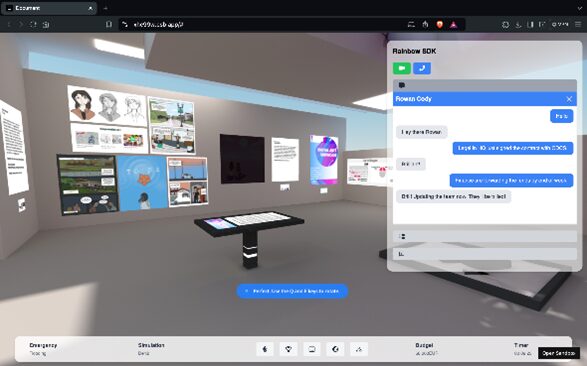
A: In Phase 2, the XRisis team completed the implementation of the validation platform for our three Pilots, and the integration of the platform with the four CORTEX2 enabling technologies. This activity was completed in parallel with the Testing and Validation Plan, deployed into Phase 3.
Q: What has XRisis achieved now that the Programme is complete?
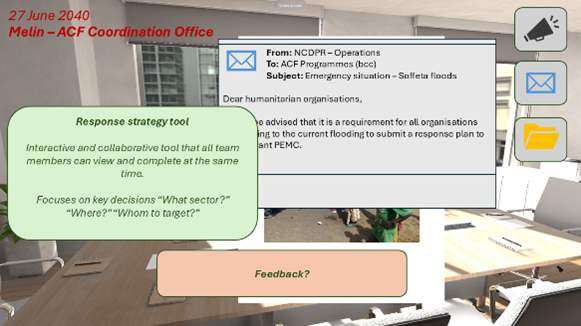
A: XRisis has created a use case that specifically addresses serious gaps in the training of humanitarian aid workers. Traditional approaches are often limited by high costs, restricted accessibility, and a lack of realism — especially for local actors with fewer resources. To overcome these bottlenecks, XR Ireland and Action Contre la Faim developed XRisis: an immersive simulation platform featuring low-threshold, interactive training formats that run on desktop computers or VR headsets, recreating real-life emergencies in a virtual environment.
 Q: What would you highlight about the Support Programme, what's helped advance your solution the most?
A: Access to a project mentor, who helped guide us through both technology bottlenecks and key CORTEX2 value adds.
Q: What's the status of XRisis after completing the Programme? What are your next steps?
A: XR Ireland has entered into a three-year agreement with Action Contre la Faim to continue to explore and develop a commercialised XR training platform for the humanitarian sector.
Check out XRisis's previous interview and stay updated on its progress!
Want to know more about other CORTEX2 innovators' updates? Browse all our supported teams on the CORTEX2 website:
Open Call 1 winners - Open Call 2 winners
CORTEX2 innovators: vScientist's 2nd progress update
Throughout the CORTEX2 Support Programme, the vScientist team transformed their VR-based concept into a fully functional, validated educational tool designed to facilitate the learning of complex fluid dynamics (CFD). By leveraging the capabilities of the CORTEX2 ecosystem, the team expanded their platform to support multiple simulation scenarios and integrated seamless remote collaboration features. With successful deployments in real classroom environments across two continents, vScientist has demonstrated its potential to revolutionise how STEM students engage with CFD.
Continue reading to explore the milestones, challenges, and next steps of vScientist.
vScientist's progress on the CORTEX2 programme
Q: How would you summarise the advances vScientist has made during Phase 2 of the CORTEX2 Support Programme?
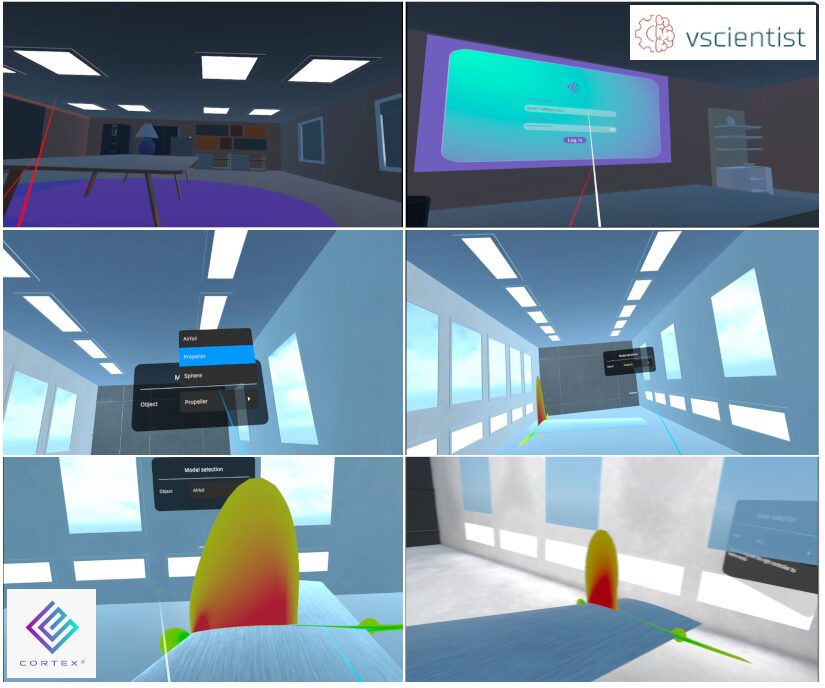
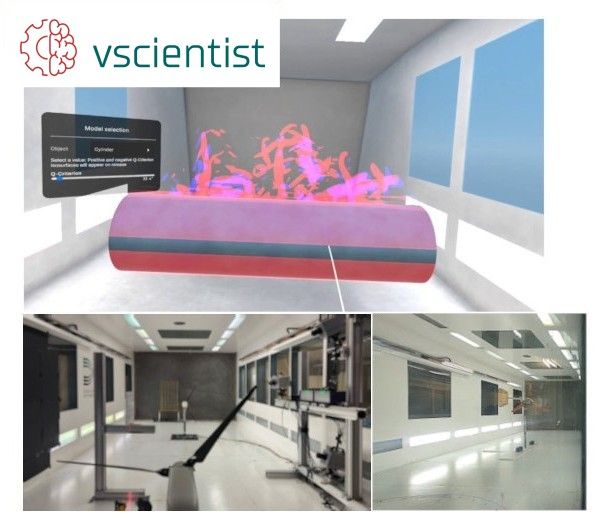
A: Phase 2 represented a significant expansion of our platform capabilities, transforming vScientist from a single-scenario proof-of-concept into a robust, educational tool. During this phase, we successfully brought our total to three distinct CFD applications: 3D virtual marine propeller testing and flow around cylindrical objects, complementing our initial virtual wind tunnel with a 3D aeroplane wing scenario.
The technical achievements during this phase were substantial. We modified our VR workflow to automate I/O processes, enabling more efficient Unity deployment of simulations. We evaluated different computational grid sizes and fluid flow features within the VR environment, optimising the user experience for complex visualisations including planes, isosurfaces, and streamlines. Most importantly, we demonstrated our Minimum Viable Product, proving that physics-based CFD simulations could be seamlessly integrated with CORTEX2's telecooperation capabilities.
This phase also marked our first systematic user testing activities. We conducted initial validation with three users during development, gathering crucial feedback that informed our approach for Phase 3. Through successful multi-scenario support, we validated our technical approach and confirmed the platform's readiness for broader educational deployment. We demonstrated the technology in relevant laboratory environments, setting the foundation for the comprehensive classroom testing that would follow in Phase 3.
 Q: What has vScientist achieved now that the Programme is complete?
A: On Phase 3, we developed a comprehensive validation in operational educational environments, transforming vScientist from a research prototype into a proven educational tool.
We conducted three workshops across NTUA (May 18th and 28th, 2025) and RMIT Vietnam, engaging 23 users, including undergraduate students, PhD researchers, and academic lecturers. Students rated the platform's potential to improve fluid dynamics learning at 4.29/5, with remarkably low complexity ratings (1.79/5) and minimal technical support requirements (1.93/5).
Key technical achievements include creating a comprehensive library for user-defined scenarios and robust validation of all three CFD applications — virtual wind tunnel, marine propeller testing, and flow around cylindrical objects.
vScientist has successfully demonstrated a remote collaboration paradigm via the CORTEX2 Rainbow platform. This is a truly innovative and inclusive way of working in meetings, which, thanks to the technology of CORTEX2 engineering teams, allows users to share ideas, interact with new designs, and come up with innovative solutions efficiently, no matter how far apart they are.
The systematic evaluation revealed significant educational impact, with students expressing substantial appreciation for the immersive experience. The platform successfully bridges theoretical concepts and practical understanding, making complex fluid dynamics accessible through interactive visualisation.
 Q: What would you highlight about the Support Programme, what's helped advance your solution the most?
A: Based on our vScientist project experience, we would highlight the CORTEX2 comprehensive framework integration and expert mentorship. The programme provided access to the CORTEX2 platform, giving us hands-on experience with telecooperation technologies exploiting VR hardware. Additionally, the valuable support of our mentors was crucial in refining our approach. The mentors were available to answer our inquiries and help us deploy the CORTEX2 ecosystem. Also, they played a vital role in speeding up the integration of the CORTEX2 framework in the virtual wind tunnel that we designed.
Q: What's the status of vScientist after completing the Programme? What are your next steps?
A: The project has resulted in a state-of-the-art VR/XR-CFD application specifically for training Fluid Dynamics STEM students. The vScientist use case has achieved TRL7 status, demonstrating its readiness for broader educational implementation.
The platform successfully passed systematic classroom testing and is delivering a fully functional VR-CFD educational tool that transforms complex fluid dynamics learning. We have created three distinct educational scenarios, established proven workflows for real-time CFD visualisation, and validated the platform's effectiveness with exceptional student feedback.
NTUA and MultiFluidX will collaborate for further developing this technology through synergies within the CORTEX2 consortium, participating in R&D and training projects. The vScientist partners will explore various approaches for commercialising pilot cases through the CORTEX2 Platform as a part of CORTEX2. To overcome barriers to market entry, we will forge partnerships with research institutions to integrate our simulator into existing software ecosystems.
Check out vScientist's previous interview and stay updated on its progress!
Want to know more about other CORTEX2 innovators' updates? Browse all our supported teams on the CORTEX2 website:
Open Call 1 winners - Open Call 2 winners
CORTEX2 innovators: SELFEX2's 2nd progress update
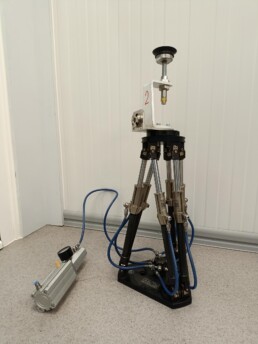
As part of the CORTEX2 Innovators Support Programme, the SELFEX2 team has successfully developed and validated a mixed reality training platform that integrates augmented and virtual reality devices — such as HoloLens 2, MANUS and MAGOS haptic gloves — into remote learning environments. Now that the Programme has concluded, SELFEX2 has demonstrated both the technical feasibility and user value of its solution. From system usability to communication quality and task accuracy, the results point to a promising future for immersive remote training.
Keep reading to learn about the key achievements and future steps in SELFEX2.
SELFEX2's progress on the CORTEX2 Programme
Q: How would you summarise the advances SELFEX2 has made during Phase 2 of the CORTEX2 Support Programme?
A: The SELFEX2 team has carried out the development and integration of SELFEX2 into the CORTEX2 framework and the subsequent deployment of an MVP. The initial architecture scheme has been followed and, together with the information provided by CORTEX2, it has been possible to achieve the real-time behaviour provided by using Rainbow calls. In this case, the SELFEX2 platform can launch a rainbow call between SELFEX2 users, sharing video, audio and kinematic information (finger and wrist positions).
Q: What has SELFEX2 achieved now that the Programme is complete?
A: As part of the validation plan, tests were performed considering four complementary approaches: P2P & Conference evaluation, evaluation from the actuator’s perspective and, subsequently, as an external observer of the system behaviour, and combined evaluation.

After the evaluation, specific questionnaires were sent to the participants to collect their assessment of the different components of the system. The forms cover aspects such as the use of HoloLens 2, the screen display, the experience with MANUS and MAGOS gloves, and the quality of communication, both in peer-to-peer calls and in multiconference sessions. The questions are oriented to evaluate comfort, usability, movement synchronisation, audio and video quality, as well as perceived value in the learning process. In addition to these subjective opinions, objective data were also collected. This included tracking the useful time spent in each session (taking into account preparation and execution times) and measuring the transmission delays for both audio (HoloLens 2) and glove data (MANUS and MAGOS). Combining user feedback with these technical measurements has provided a clear view of the system’s performance and its potential for real-world training environments.
SFC, as end-user, established a set of acceptance criteria to verify the fulfilment of the project requirements.
The general average rating for the MANUS and MAGOS gloves exceeded the expected threshold (>2), with scores of 3.08 and 2.48, respectively, for the models evaluated. Both results fall within the 'acceptable' range, reflecting a positive user perception of comfort and usability during the tests. In terms of accuracy, both MANUS and MAGOS gloves met the expected threshold (>2), achieving average scores of 3 and 2, respectively. Both results fall within the 'acceptable' range, confirming their suitability for the evaluated tasks.
In terms of visualisation, the feedback from participants was positive. HoloLens 2 scored 3.23 on average, and the screen display achieved 2.53, both above the defined acceptance threshold and aligned with the expected usability level for this kind of training. The measured communication delays stayed within acceptable limits for the tests performed. The audio delay through HoloLens 2 averaged 3449 ms (target <5 s), while the data transmission from the gloves via DataChannel maintained an excellent 41 ms average (target <1 s). Both results ensured the correct execution of the training sessions.
In summary, SELFEX2 demonstrated technical and functional feasibility in remote training environments, with full integration of devices such as HoloLens 2 and haptic gloves (MANUS and MAGOS). Execution times, communication quality and user experience have reached acceptable levels for the evaluated scenarios.
Q: What would you highlight about the Support Programme, what's helped advance your solution the most?
A: The highlight of the CORTEX2 program has been access to key resources that have enabled a thorough and rigorous evaluation of the solution. Thanks to the Programme, we have had the environment, devices and technical support to validate our proposal in real conditions. This opportunity has been fundamental to advancing the development and confirming the technical and functional feasibility of the solution.
Q: What's the status of SELFEX2 after completing the Programme? What are your next steps?
A: Following the conclusions obtained, some areas for improvement have been identified, which open the door to future optimisations in terms of accuracy, comfort and visualisation.
- Virtualisation of the scene
- Increased number of antennas for motion capture
- Improved computer performance
Check out SELFEX2's previous interview and stay updated on its progress!
Want to know more about other CORTEX2 innovators' updates? Browse all our supported teams on the CORTEX2 website:
Open Call 1 winners - Open Call 2 winners
CORTEX2 innovators: SCIPLANT's 2nd progress update
As urban development becomes increasingly complex, participatory planning tools are needed more than ever. SCIPLANT has created an XR-based solution that reimagines how cities engage communities in shaping their surroundings. Throughout the CORTEX2 Support Programme, the team transformed their initial concept into a robust, interactive platform that blends immersive storytelling, real-time feedback, and multi-user collaboration. With six CORTEX2 technologies now integrated and user-tested, SCIPLANT is ready for growth.
Keep reading to learn about the key achievements and future steps in SCIPLANT — Sustainable City Planning Tool in Extended Reality.
SCIPLANT's progress on the CORTEX2 Programme
Q: How would you summarise the advances SCIPLANT has made during Phase 2 of the CORTEX2 Support Programme?
A: During Phase 2, SCIPLANT evolved from concept to a functional XR prototype with three immersive planning scenarios: Site Analysis, Virtual Tour, and Town Hall. We began integrating CORTEX2 technologies and showcased early builds at Web Summit Doha and Web Summit Rio. These demos helped shape SCIPLANT’s positioning as a real-time, feedback-enabled tool for participatory urban planning, accessible via XR headsets and Rainbow-powered webcam interfaces.
Q: What has SCIPLANT achieved now that the Programme is complete?
A: In Phase 3, SCIPLANT reached technical maturity with six fully integrated CORTEX2 services:
- Rainbow SDK (audio/video calls)
- Screensharing
- COVA (voice assistant)
- Gesture module (Sensorama)
- 3D reconstruction toolkit
- Meeting summarisation tool
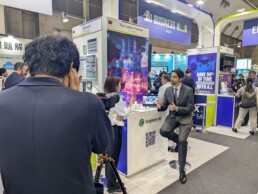
We conducted our final user testing campaign at the Azul Game Jam in Lisbon, receiving feedback from 15 participants using in-headset interaction tools. We also presented the solution to global stakeholders at Japan Spring IT Week 2025. These activities confirmed the system’s readiness for pilot deployments, and we finalised our business model, IP strategy, and exploitation roadmap for post-project sustainability.

Q: What would you highlight about the Support Programme, what's helped advance your solution the most?
A: The most impactful component of the CORTEX2 Support Programme was the Rainbow Unity SDK, which evolved significantly during our project. It enabled seamless audio/video calling and screen sharing directly inside XR, transforming SCIPLANT from a standalone urban planning tool into a truly collaborative, multi-user experience. This integration unlocked the use of COVA and the meeting summarisation tool, allowing real-time voice navigation and structured feedback capture — key to making SCIPLANT a participatory planning solution, not just a visual one.
Q: What's the status of SCIPLANT after completing the Programme? What are your next steps?
A: SCIPLANT is now a validated prototype, tested with over 15 users across three immersive scenarios. After integrating six CORTEX2 technologies, it’s fully functional for demos and pilot deployments. Next, we aim to secure public funding and launch municipal pilots in Europe and Asia, while exploring Unity Asset Store packaging and commercial XR integrations.
Check out SCIPLANT's previous interview and stay updated on its progress!
Want to know more about other CORTEX2 innovators' updates? Browse all our supported teams on the CORTEX2 website:
Open Call 1 winners - Open Call 2 winners

What’s new in BeyondXR: Latest highlights from the cluster projects
Earlier this year, nine cutting-edge EU-funded projects came together to form the BeyondXR cluster. In this collaborative space, extended reality (XR), artificial intelligence (AI), and robotics meet to drive innovation across education, industry, and emerging technologies. Since our first joint update, “Shaping the Future with XR, AI and Robotics”, our cluster has grown, and five new projects have joined: SPIRIT, MOTIVATE XR, VOXReality, XR2Industry and OpenVerse.
Each project has continued to break new ground. From open calls and pilot launches to new partnerships and validation studies, here’s a quick round-up of what’s been happening across the cluster.
CORTEX2
At CORTEX2, we are excited to announce our participation in EuroXR 2025, one of Europe’s leading events for the XR community, taking place from 3–5 September 2025 in Winterthur, Switzerland. We have joined forces with our sister project, SPIRIT, for a special session titled: “Extended Collaborative Telepresence – How CORTEX² and SPIRIT are Advancing Innovation in XR” — which will also be our final event. This joint track will highlight the impact of our cascade funding programmes, featuring research outcomes, live demonstrations, and practical applications. In total, results from over 50 funded initiatives will be presented, offering valuable insights into how European projects are shaping the future of XR. Save the date and stay tuned to learn more!
XR5.0
The XR5.0 project has successfully delivered five impactful webinars, each drawing strong interest from the XR community. With a minimum of 40 attendees per session — and the inaugural webinar reaching full registration capacity — the series has become a valuable forum for researchers, developers, and industry leaders to explore the human-centric transformation of XR technologies. These knowledge-sharing events continue to spark dialogue around the role of XR in reshaping training, collaboration, and user experience.
XR2Learn
XR2Learn continues to promote the 10 winners from its Open Call #2, whose implementation phases will last from April 2025 to March 31, 2026. Each winner presents their solutions via an interview on the website and a video on YouTube to showcase their solutions. The consortium met on 7 and 8 May in Lugano, Switzerland, for its General Assembly, also showcasing some of the Open Call 2 winners’ solutions. The platform was also showcased. Finally, a technical deep dive was presented, with a tutorial on enablers.
The XR2Learn Forum is live and fast becoming a vibrant hub for collaboration, knowledge sharing, and innovation in immersive learning: This is more than just a discussion space — it’s where XR developers, educators, startups, and enthusiasts connect, access tutorials, find technical guidance, exchange ideas, and get inspired. Whether you’re looking for answers, want to share your experience, or discover the latest trends in XR for education and training, the forum is the right place to be.
XR2Industry
XR2Industry will be announcing the results of their second Open Call very soon. The second Open Call received 51 applications from across Europe. It focused on XR software solutions, with strict criteria around interoperability, scalability, and integration with XR headsets. Selected companies will each receive up to €275,000 in funding. We just launched the 3rd Open Call about Use Cases. The third Open Call is open until 12 August 2025. It targets research–industry consortia and focuses on 4 defined challenges, such as MR training and workflow support. Each selected team can receive up to €233,900. Projects must already be at TRL 7 or 8. Finally, we just started mentoring sessions for OC1 HW enablers. Six hardware enablers selected through the first Open Call have now entered a 2-month mentoring phase. The goal is to help them refine their technology and prepare it for integration into the XR2Industry headset.
MASTER
Over the past months, the MASTER project has continued work on both its open calls. The execution phase of the 1st Open Call is underway, with 17 winning projects implementing novel XR technologies in the MASTER Platform. In parallel, the project launched its 2nd Open Call from April to June, aimed at attracting new contributors to explore and validate XR technologies in learning settings. Currently, the applications are being evaluated. Furthermore, in June, the MASTER consortium met in Eibar, Spain, for its General Assembly, hosted by Tekniker and Aleco. During the meeting, the progress achieved over the past year was reviewed and upcoming activities were planned.
HECOF
The HECOF project reached a milestone in May with its Final Conference in Brussels. Attendees were treated to live VR demonstrations and presentations showcasing AI-driven personalised learning systems, underlining HECOF’s transformative impact on higher education. Pilot universities in Italy and Greece shared insights on the successful integrations of HECOF’s solutions into real classrooms. A session dedicated to ethical and legal considerations of AI emphasised responsible innovation. Collaborative discussions with sister EU-funded projects from BeyondXR underscored the value of transdisciplinary approaches. The project now enters its 2nd and final evaluation phase, with POLIMI and NTUA universities continuing to refine and validate HECOF’s cutting-edge educational tools.
SPIRIT
The second SPIRIT Open Call was open to a wide range of third-party contributors, allowing them to validate and test their applications on the SPIRIT platform, Europe’s first multi-site and interconnected platform for real-time immersive telepresence applications. The project recently announced the 16 winning projects that will contribute to the advancement of immersive telepresence across Europe. Interviews with the winners of Open Call 2 are now available, offering insights into their innovative ideas and the creative elements of their work. Meanwhile, the rollout of the first open call projects is now underway.
MOTIVATE XR
Imagine making complex industrial tasks engaging, safer, and accessible to all. That’s the core of MOTIVATE XR. The project is developing a cutting-edge suite of XR tools for collaborative authoring, publishing, and experiencing, revolutionising training and assistance for industrial operations like assembly and maintenance. Its user-centered co-design methodology means anyone can use it, no programming skills required.
MOTIVATE XR just completed its first successful year, laying a strong foundation through intense collaboration. User needs for the five industrial pilots were defined, shaping system requirements and tool identification. The platform’s architecture was also designed with interoperability and security in mind, and a user-centric approach to UX was developed. Beyond the tech, the project has proactively addressed the social, ethical, and legal challenges of AI and XR, setting clear principles for secure collaboration, data privacy, and open science. Looking ahead, the project’s fourth General Assembly meeting will be a crucial milestone. This gathering, set to take place in Bordeaux in September 2025, will assess progress, present outcomes, and strengthen partner collaboration as MOTIVATE XR advances to preparing for its first beta release, implementing solutions across pilot applications, and defining its business model. Keep up-to-date with the project progress by subscribing to our Newsletter.
VOXReality
VOXReality is entering an exciting new phase as it begins its large scale piloting activities across its three use cases: the Virtual Reality Conference, the Augmented Reality Training Assistant, and the Augmented Reality Theatre. These innovative applications are being tested to refine their impact and functionality across diverse real-world scenarios. In April 2025, the consortium gathered for its General Assembly meeting, hosted by Maggioli SpA at its headquarters in Santarcangelo di Romagna. The meeting was accompanied with internal piloting sessions, offering hands-on demonstrations and evaluations of the project’s key outputs. Meanwhile, VOXReality continues to actively support its Open Call projects, which are now advancing into their final stages. The team remains committed to ensuring these projects successfully deliver on their goals, fostering innovation and collaboration within the VOXReality ecosystem.
OpenVerse
As part of its efforts to strengthen the European ecosystem for Virtual Worlds, the OPENVERSE project has launched the collection of case studies, company examples, and national initiatives to be showcased in the Virtual Worlds Observatory. This observatory serves as a central hub for knowledge and inspiration, highlighting impactful use cases emerging from open call winners, pilot activities from EU-funded projects, and industry-led implementations. If your organisation is working on Virtual Worlds and would like to be featured, we invite you to reach out via community@open-verse.eu. In parallel, OPENVERSE is organising two thematic workshops to delve deeper into the foundational enablers of Virtual Worlds: one dedicated to computing and networks, and another focused on data and data spaces. These sessions aim to gather expert insights, foster dialogue, and contribute directly to the shaping of the OPENVERSE Technology Framework.
TRANSMIXR
TRANSMIXR created two XR guides on how to explore AI. Dive deeper into these possibilities and discover practical strategies for creating meaningful immersive experiences with cultural heritage in the “Creating meaningful interactions with cultural heritage in immersive environments” and “Diversity, Equity and Inclusion (DEI) Reflection Tool”, this guide is designed for technology designers and developers, as well as professional users, who wish to ensure the tools they create and utilize are as inclusive as possible. This commitment guarantees that innovation serves the common good.
As we continue exploring the potential of XR, AI, and Robotics in real-world applications, we’ll be back with more updates and opportunities to engage.
Join the BeyondXR LinkedIn group to stay tuned and follow our projects for more breakthroughs, events, and ways to get involved!
CORTEX2 innovators: XRehab's 2nd progress update
With the conclusion of the CORTEX2 Innovators Support Programme, XRehab has emerged as a promising, validated VR-based platform for digital neurorehabilitation. Designed to support patients with neuromuscular and neurodegenerative conditions, the solution blends immersive virtual environments with multilingual AI voice guidance to create emotionally engaging and functional rehabilitation experiences, accessible both in clinical settings and at home. Over the past months, the XRehab team has refined its technology, validated its usability and therapeutic potential, and taken significant steps toward sustainable implementation. The platform is now ready to support patients beyond the pilot phase.
We spoke with the team to hear how they got here, and what’s next. Keep reading to learn more about XRehab — Extended Reality for Neurological Rehabilitation.
XRehab's progress on the CORTEX2 Programme
Q: How would you summarise the advances XRehab has made during Phase 2 of the CORTEX2 Support Programme?
A: During Phases 2 and 3 of the XRehab project, significant progress was achieved in the development, refinement, and preliminary validation of the VR-based rehabilitation platform. The project successfully finalised the core technical components, including the design and implementation of two primary categories of immersive scenarios: emotionally engaging outdoor environments and activity-based simulations for daily living tasks.
Key achievements include the creation of emotionally engaging exploration scenarios and a functional daily activity module, both supported by multilingual AI-generated voice guidance, available in both English and Italian, to enhance user engagement and accessibility.
A structured user experience validation was successfully conducted, confirming the system’s usability, emotional impact, and therapeutic potential. Additionally, the foundation for future exploitation was laid through the development of a strategic sustainability and commercialisation plan, identifying key integration opportunities with healthcare systems and establishing a strategic roadmap for scaling the solution in clinical and home care environments.
These advances collectively brought the project closer to its goal of delivering an effective, accessible, and sustainable digital rehabilitation tool for neuromuscular and neurodegenerative patients.
Q: What has XRehab achieved now that the Programme is complete?
A: With the completion of the CORTEX2 Support Programme, the XRehab project has successfully reached key technical, clinical, and strategic milestones, positioning itself as a mature and validated solution for digital neurorehabilitation.
The project has delivered a fully functional VR-based rehabilitation platform, integrating immersive, AI-enhanced virtual environments specifically designed for patients with neuromuscular and neurodegenerative conditions. The platform now includes two validated sets of VR scenarios — emotion-focused nature explorations and activity-oriented home simulations — each enriched with real-time, multilingual AI voice guidance to support patient engagement and emotional well-being.
Throughout the programme, the XRehab system was technically and pre-clinically tested and underwent structured user experience evaluations, demonstrating high levels of usability, user satisfaction, and engagement, while also confirming the absence of adverse effects such as cyber sickness. These evaluations validated both the emotional and functional benefits of the platform, with clear indications of its potential for improving rehabilitation outcomes.
Q: What would you highlight about the Support Programme, what's helped advance your solution the most?
A: The CORTEX2 Support Programme provided an essential framework for accelerating the technical and clinical advancement of the XRehab platform. One of the most valuable aspects of the programme was the collaborative environment it fostered, allowing for direct engagement with technical experts and other digital VR innovators. This collaborative setting enabled the XRehab team to refine its approach and align technical developments with clinical priorities effectively.
A key benefit was the opportunity to integrate selected CORTEX2 services — such as videoconferencing — which are highly relevant for the platform’s future exploitation in remote rehabilitation and telemedicine contexts.
Q: What's the status of XRehab after completing the Programme? What are your next steps?
A: After completing the CORTEX2 Support Programme, the XRehab platform has reached a mature and validated status, both from a technical and clinical perspective. The platform has been optimised for Meta Quest headsets, ensuring portability and ease of use in clinical and home settings.
The solution has been successfully validated through structured user experience testing in a clinical environment, with positive feedback regarding usability, engagement, emotional impact, and overall system performance. Importantly, no adverse effects were reported, and key performance indicators for usability and effectiveness have been fully achieved.
With this strong foundation, the following steps for XRehab focus on:
- Deployment in clinical settings not only for neurodegenerative diseases.
- Improving scenario realism, expanding the range of activities of daily living (ADLs), and integrating GenAI for additional features and scenarios.
- Additionally, the team will focus on securing further funding, pursuing regulatory pathways, and engaging with stakeholders to ensure a smooth transition from project completion to market adoption.
The platform is now well-positioned for sustainable growth and long-term impact in the digital rehabilitation field.
Check out XRehab's previous interview and stay updated on its progress!
Want to know more about other CORTEX2 innovators' updates? Browse all our supported teams on the CORTEX2 website:
Open Call 1 winners - Open Call 2 winners
CORTEX2 showcases XR innovation at VR Days with DG DIGIT
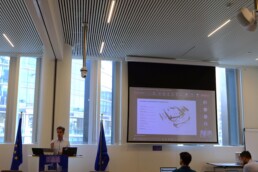
In June 2025, the CORTEX2 team was invited by the EU Directorate-General for Digital Services (DG DIGIT) to participate in VR Days — a two-part event held on 16 June in Brussels and 26 June in Luxembourg. Organised by the European Commission, the initiative aimed to raise awareness around extended reality (XR) solutions within EU institutions and to explore how such technologies can support more effective and sustainable operations.
Representing CORTEX2, Alain Pagani, Principal Researcher, Computer Vision at DFKI, and CORTEX2 Project Coordinator, and Narek Minaskan, Project Leader and Research Engineer at DFKI, Augmented Vision group, presented the project’s vision, goals, and practical applications. One of the highlights was a live demonstration of our pilot on Industrial Remote Cooperation, which shows how XR technologies can enable immersive, collaborative industrial interventions using accessible devices and under limited bandwidth conditions.
This pilot demonstrates:
- Real-time gesture and scene semantics analysis for video annotations
- Audio transcription and voice commands for interaction and documentation
- Integration of multiple video and IoT data sources to create a rich collaboration environment
- Smart orchestration of video and metadata streams for optimised bandwidth usage
These events not only sparked valuable exchanges with European Commission colleagues but also helped inspire cross-institutional initiatives and future opportunities for collaboration around immersive technology.
We thank DG DIGIT for the invitation and look forward to continuing the conversation on how XR can transform work across sectors and institutions.
Learn more about CORTEX2 in our final event, which will take place during the 22nd EuroXR International Conference – EuroXR 2025, from September 3 to 5, 2025, in Winterthur, Switzerland.
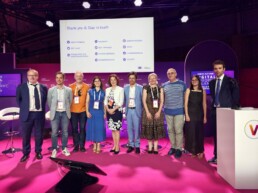
CORTEX2 at Viva Technology 2025: Showcasing the future of remote collaboration with XR
CORTEX2 was featured at the HaDEA Workshop on EU Funding for Digital Technologies, held during Viva Technology 2025 — Europe’s premier technology and innovation event, which took place in Paris from 11 to 14 June.
On 13 June, our Project Coordinator, Alain Pagani, Principal Researcher in Computer Vision at DFKI, presented our latest results at Viva Technology 2025, highlighting how our immersive XR-based tools support remote collaboration across various sectors, including healthcare, education, business, and industry.
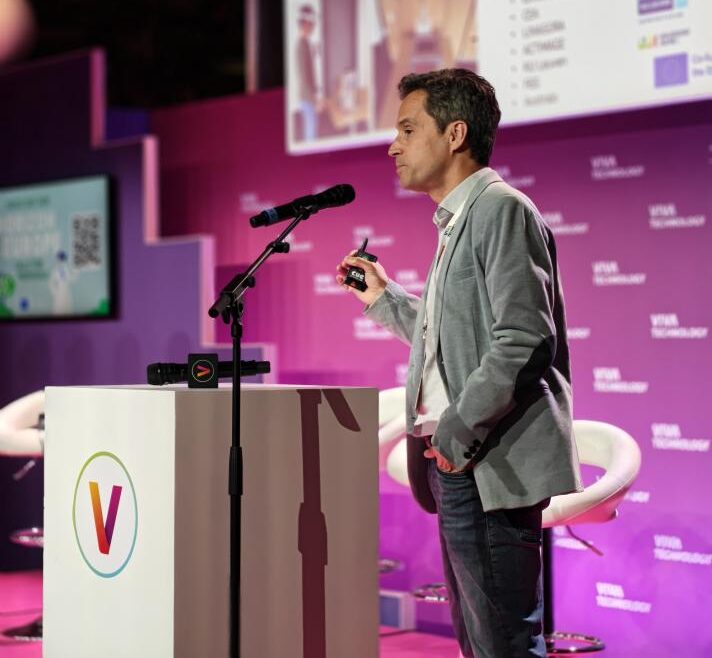
The session was part of a workshop organised by the European Health and Digital Executive Agency (HaDEA), showcasing successful EU-funded projects under the Horizon Europe and Digital Europe programmes. These programmes are central to the EU's investments in digital technologies, supporting innovation across various domains.
We were in great company, alongside fellow HaDEA-supported projects:
- PhotonQBoost, developing photonics and quantum technologies for sustainable industry and onboarding 600 SMEs to its service pipeline.
- AI and Health, designing training for university graduates, employees, and medical practitioners to adopt effective AI solutions in healthcare.
- POTENTIAL, testing the interoperability of Europe’s Digital Identity Wallet across 18 EU countries and Ukraine.
The workshop offered a platform to exchange ideas, explore synergies, and discuss how digital innovation is shaping Europe’s future.
Download the workshop presentation and explore the outcomes of the event on the HaDEA website.
Stay tuned for updates on our progress!