Throughout the CORTEX2 Support Programme, the vScientist team transformed their VR-based concept into a fully functional, validated educational tool designed to facilitate the learning of complex fluid dynamics (CFD). By leveraging the capabilities of the CORTEX2 ecosystem, the team expanded their platform to support multiple simulation scenarios and integrated seamless remote collaboration features. With successful deployments in real classroom environments across two continents, vScientist has demonstrated its potential to revolutionise how STEM students engage with CFD.
Continue reading to explore the milestones, challenges, and next steps of vScientist.
vScientist’s progress on the CORTEX2 programme
Q: How would you summarise the advances vScientist has made during Phase 2 of the CORTEX2 Support Programme?
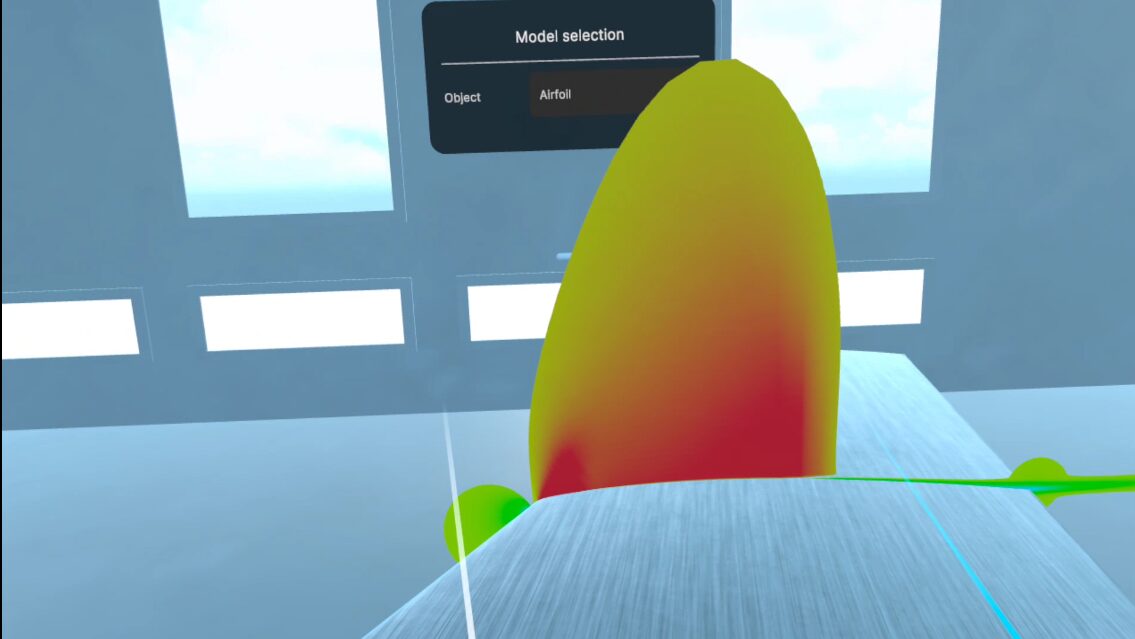
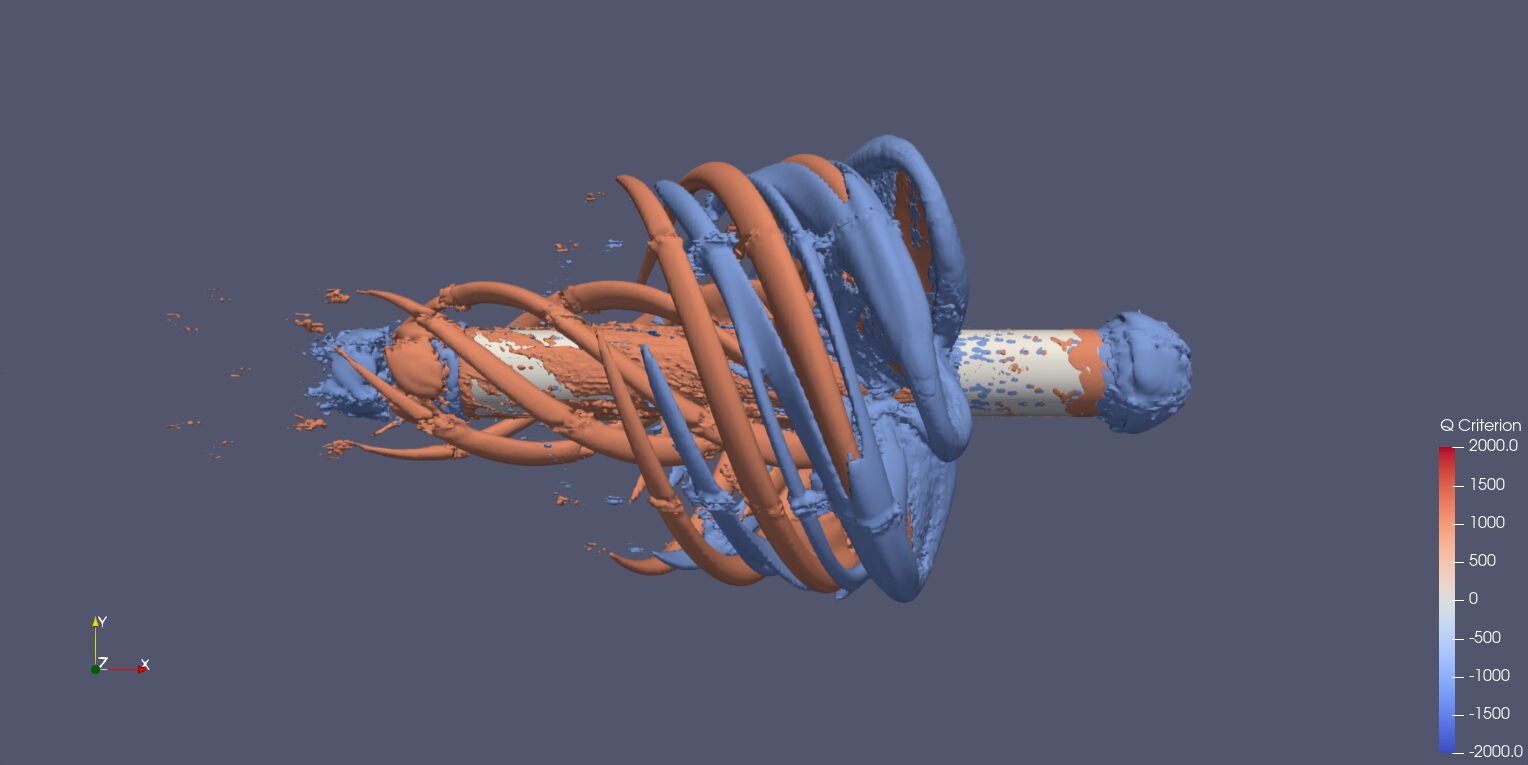
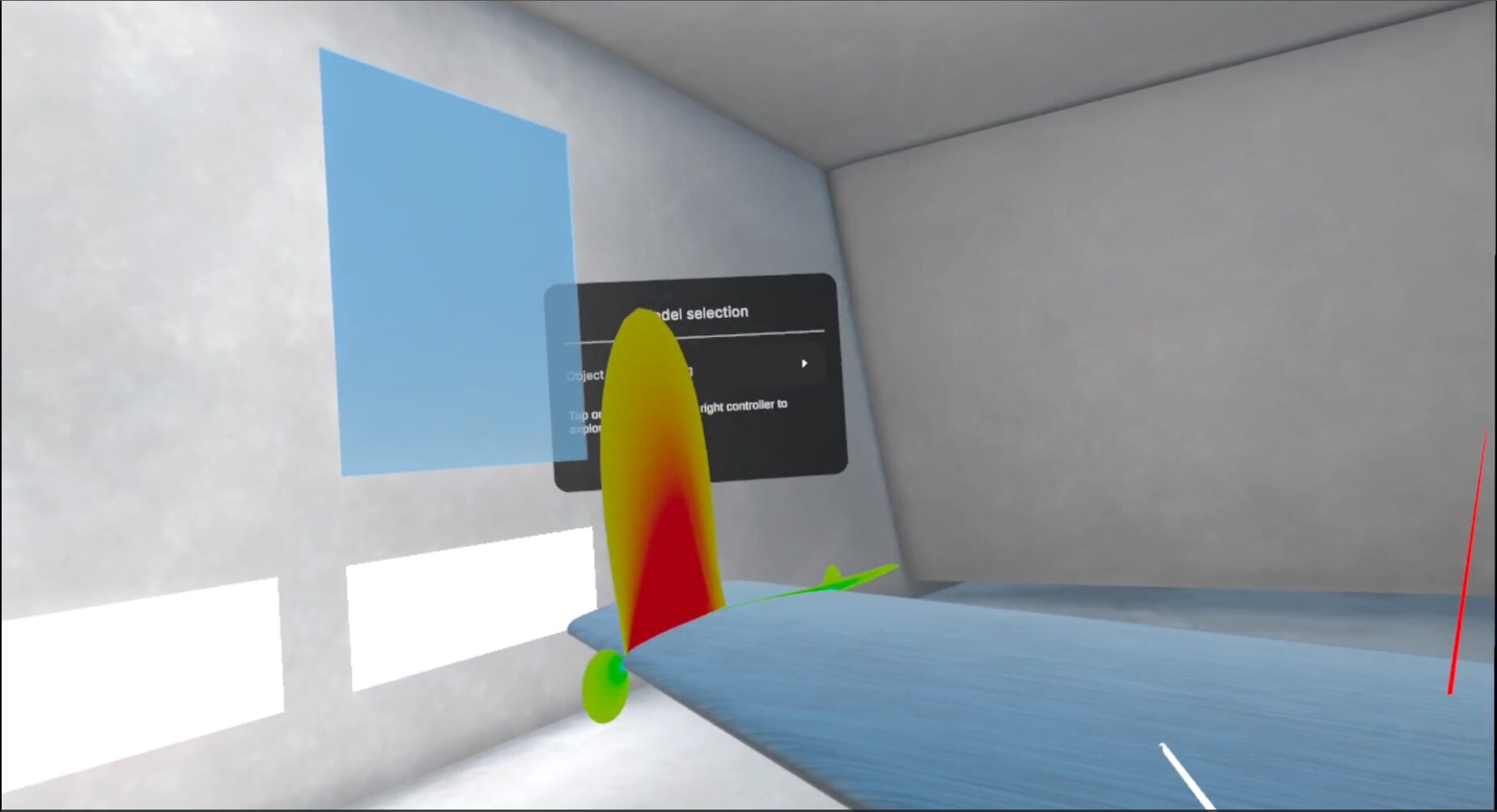
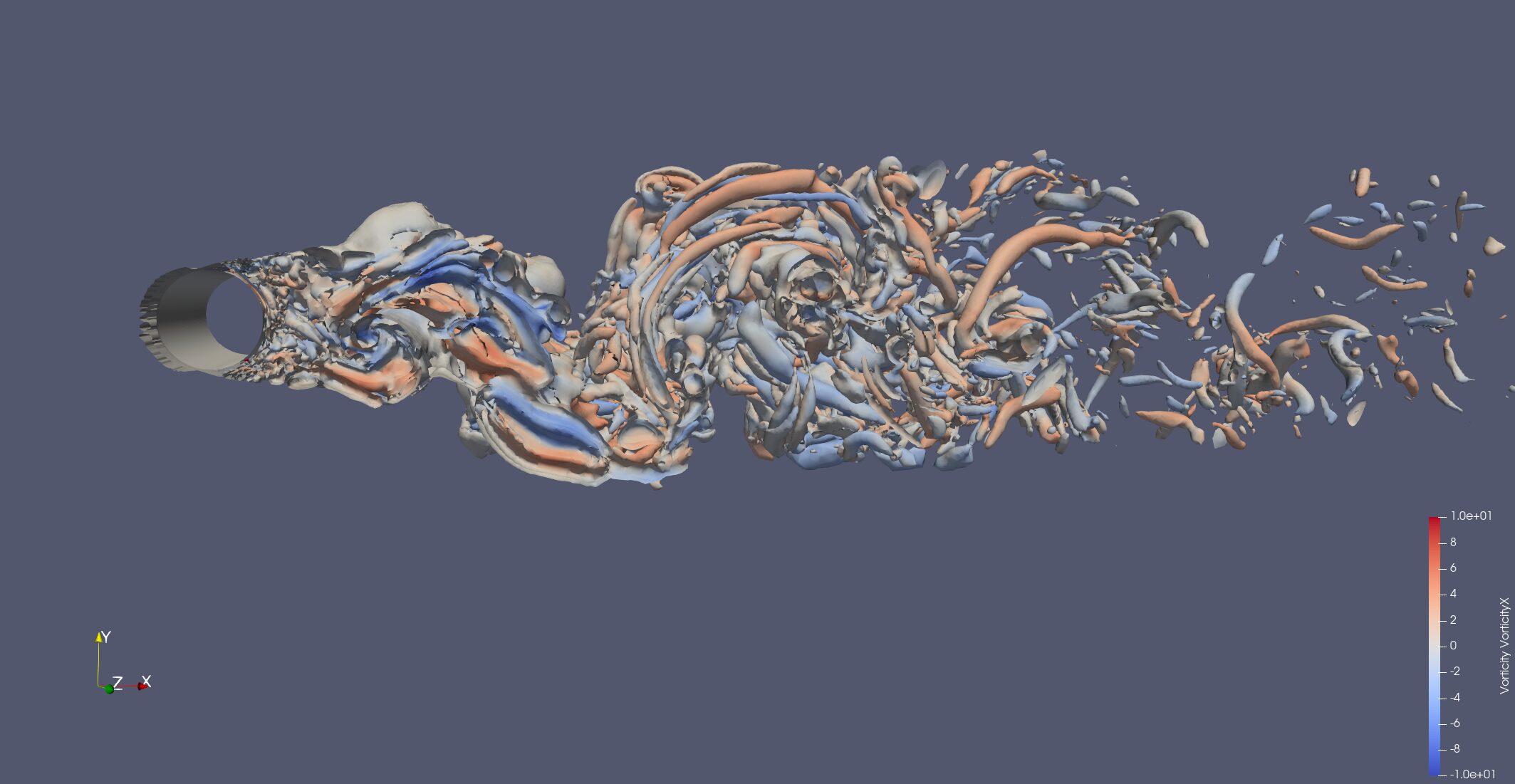
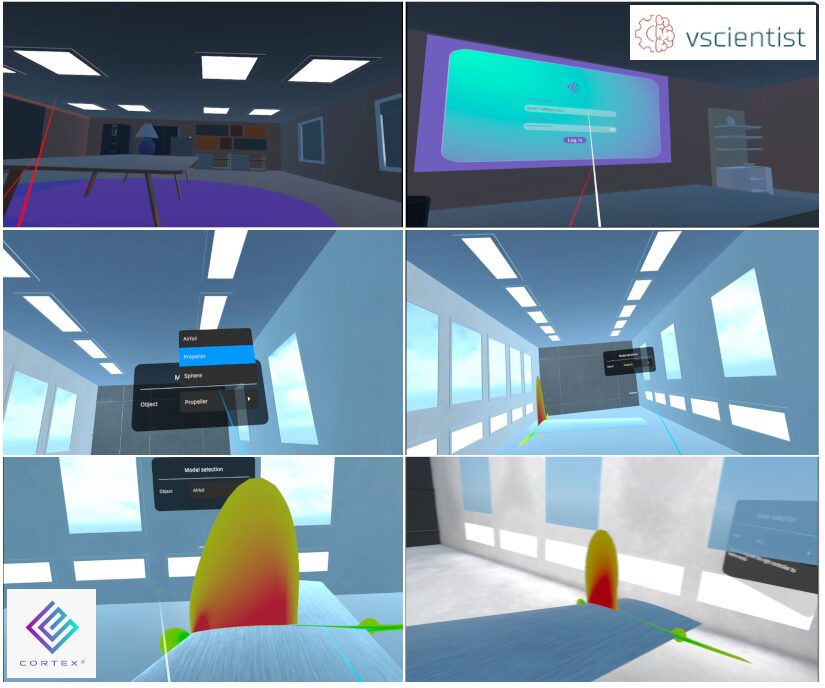
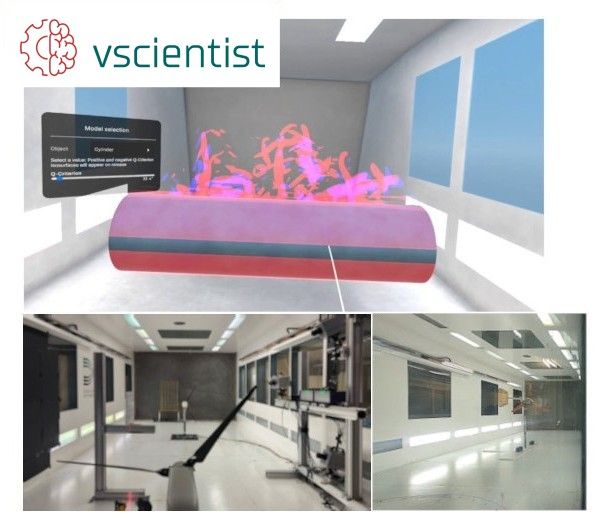
A: Phase 2 represented a significant expansion of our platform capabilities, transforming vScientist from a single-scenario proof-of-concept into a robust, educational tool. During this phase, we successfully brought our total to three distinct CFD applications: 3D virtual marine propeller testing and flow around cylindrical objects, complementing our initial virtual wind tunnel with a 3D aeroplane wing scenario.
The technical achievements during this phase were substantial. We modified our VR workflow to automate I/O processes, enabling more efficient Unity deployment of simulations. We evaluated different computational grid sizes and fluid flow features within the VR environment, optimising the user experience for complex visualisations including planes, isosurfaces, and streamlines. Most importantly, we demonstrated our Minimum Viable Product, proving that physics-based CFD simulations could be seamlessly integrated with CORTEX2‘s telecooperation capabilities.
This phase also marked our first systematic user testing activities. We conducted initial validation with three users during development, gathering crucial feedback that informed our approach for Phase 3. Through successful multi-scenario support, we validated our technical approach and confirmed the platform’s readiness for broader educational deployment. We demonstrated the technology in relevant laboratory environments, setting the foundation for the comprehensive classroom testing that would follow in Phase 3.
 Q: What has vScientist achieved now that the Programme is complete?
A: On Phase 3, we developed a comprehensive validation in operational educational environments, transforming vScientist from a research prototype into a proven educational tool.
We conducted three workshops across NTUA (May 18th and 28th, 2025) and RMIT Vietnam, engaging 23 users, including undergraduate students, PhD researchers, and academic lecturers. Students rated the platform’s potential to improve fluid dynamics learning at 4.29/5, with remarkably low complexity ratings (1.79/5) and minimal technical support requirements (1.93/5).
Key technical achievements include creating a comprehensive library for user-defined scenarios and robust validation of all three CFD applications — virtual wind tunnel, marine propeller testing, and flow around cylindrical objects.
vScientist has successfully demonstrated a remote collaboration paradigm via the CORTEX2 Rainbow platform. This is a truly innovative and inclusive way of working in meetings, which, thanks to the technology of CORTEX2 engineering teams, allows users to share ideas, interact with new designs, and come up with innovative solutions efficiently, no matter how far apart they are.
The systematic evaluation revealed significant educational impact, with students expressing substantial appreciation for the immersive experience. The platform successfully bridges theoretical concepts and practical understanding, making complex fluid dynamics accessible through interactive visualisation.
 Q: What would you highlight about the Support Programme, what’s helped advance your solution the most?
A: Based on our vScientist project experience, we would highlight the CORTEX2 comprehensive framework integration and expert mentorship. The programme provided access to the CORTEX2 platform, giving us hands-on experience with telecooperation technologies exploiting VR hardware. Additionally, the valuable support of our mentors was crucial in refining our approach. The mentors were available to answer our inquiries and help us deploy the CORTEX2 ecosystem. Also, they played a vital role in speeding up the integration of the CORTEX2 framework in the virtual wind tunnel that we designed.
Q: What’s the status of vScientist after completing the Programme? What are your next steps?
A: The project has resulted in a state-of-the-art VR/XR-CFD application specifically for training Fluid Dynamics STEM students. The vScientist use case has achieved TRL7 status, demonstrating its readiness for broader educational implementation.
The platform successfully passed systematic classroom testing and is delivering a fully functional VR-CFD educational tool that transforms complex fluid dynamics learning. We have created three distinct educational scenarios, established proven workflows for real-time CFD visualisation, and validated the platform’s effectiveness with exceptional student feedback.
NTUA and MultiFluidX will collaborate for further developing this technology through synergies within the CORTEX2 consortium, participating in R&D and training projects. The vScientist partners will explore various approaches for commercialising pilot cases through the CORTEX2 Platform as a part of CORTEX2. To overcome barriers to market entry, we will forge partnerships with research institutions to integrate our simulator into existing software ecosystems.
Check out vScientist’s previous interview and stay updated on its progress!
Want to know more about other CORTEX2 innovators’ updates? Browse all our supported teams on the CORTEX2 website:
Open Call 1 winners – Open Call 2 winners